Lake Manyara is one of Tanzania's most enchanting and diverse destinations, a place where breathtaking landscapes meet incredible wildlife and rich cultural heritage. Nestled at the base of the Great Rift Valley escarpment, Lake Manyara National Park offers a unique safari experience that combines the beauty of a soda lake with the richness of ground-water forests and the drama of the surrounding cliffs. A tour of Lake Manyara is an essential part of any Tanzanian adventure, offering a glimpse into the remarkable diversity of the country's natural wonders.
The Beauty of Lake Manyara
Lake Manyara National Park is named after the stunning soda lake that dominates its landscape. The lake covers approximately two-thirds of the park, its shimmering waters reflecting the surrounding cliffs and forests. The lake is a haven for birdlife, attracting thousands of flamingos, pelicans, and other water birds that create a spectacular display of color and movement. The sight of thousands of flamingos taking flight against the backdrop of the Rift Valley escarpment is one of the most iconic images of East Africa.
The park's location at the foot of the Great Rift Valley creates a unique microclimate that supports a rich diversity of habitats. The ground-water forests are fed by springs that flow from the cliffs, creating a lush and green environment that is home to a wide variety of wildlife. The forests give way to grassy floodplains, which are dotted with acacia trees and provide excellent grazing for herds of zebra, wildebeest, and buffalo. The variety of habitats within the park makes it one of the most rewarding destinations for wildlife viewing.
The Wildlife of Lake Manyara
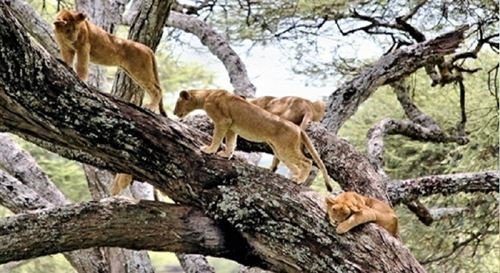
Lake Manyara National Park is famous for its tree-climbing lions, one of the most unusual wildlife spectacles in Africa. These lions can often be seen lounging in the branches of acacia trees, a behavior that is thought to be a response to the heat on the ground or to avoid biting insects. Spotting these lions in the trees is a truly memorable experience and a highlight of any visit to the park.
The park is also home to large herds of elephants, which are often seen making their way through the forests. The elephants are among the largest in Africa, their size a testament to the rich food sources available in the park. They can be seen grazing on the floodplains, browsing in the forests, or bathing in the lake, offering excellent opportunities for wildlife photography.
Beyond the lions and elephants, the park is home to a wide variety of other animals, including hippos, giraffes, zebras, wildebeest, and buffalo. The park is also a birdwatcher's paradise, with over 400 species of birds recorded. The flamingos, pelicans, and storks are particularly impressive, while the numerous raptors, including eagles and vultures, soar overhead.
The Great Rift Valley Escarpment
The Great Rift Valley escarpment forms the western boundary of the park, rising dramatically above the valley floor. The cliffs are covered in lush vegetation and provide a stunning backdrop to the landscape. The escarpment is also home to a variety of wildlife, including baboons, monkeys, and leopards. The views from the top of the escarpment are breathtaking, offering panoramic views of the park and the lake far below.
The Tree-Climbing Lions of Manyara
The tree-climbing lions of Lake Manyara are one of the park's most famous attractions. These lions are known for their unusual behavior of climbing and resting in trees, a sight that is rare in other parts of Africa. The lions use the trees to escape the heat on the ground, to avoid biting insects, and to keep an eye on their prey. Spotting a lion in a tree is a unique experience that adds to the magic of a visit to the park.
The lions in Lake Manyara are known to be quite habituated to vehicles, which allows for close-up viewing and excellent photography opportunities. Seeing these majestic animals in the trees, often draped across branches in relaxed poses, is a memory that will last a lifetime.
The Birdlife of Lake Manyara
Lake Manyara is a paradise for birdwatchers, with its soda lake attracting thousands of flamingos, pelicans, and other water birds. The lake is particularly famous for its flamingos, whose pink plumage creates a striking contrast against the blue waters and green landscapes. The sight of thousands of flamingos feeding along the shores of the lake is a truly spectacular sight.
The park is also home to many other bird species, including the iconic yellow-collared lovebird, which can often be seen in the acacia trees. The park is also home to many raptors, including the African fish eagle, which can be seen diving for fish in the lake.
When to Visit Lake Manyara
Lake Manyara National Park is a year-round destination, but the best time to visit depends on what you want to see and experience. The dry season, from June to October, offers excellent wildlife viewing, as the animals are concentrated around the water sources. The vegetation is thinner, making it easier to see the wildlife, and the skies are clear, providing excellent visibility.
The rainy season, from November to May, offers a lush green landscape and fewer crowds. The rains bring out a rich carpet of greenery, making the scenery particularly beautiful. This is also the time when many animals give birth, adding to the wonder of the experience. The short rains from November to December and the long rains from March to May each have their unique charm.
Combining Manyara with Other Destinations
Manyara is an excellent addition to a larger Northern Circuit safari, combining with other iconic destinations such as the Serengeti, Ngorongoro Crater, and Tarangire National Park. The park's location makes it an ideal stop on the way from Arusha to the Serengeti, offering a taste of Tanzania's rich wildlife before heading to the bigger parks.
A typical itinerary might include a game drive in Lake Manyara in the morning, followed by a drive to the Serengeti in the afternoon. Alternatively, Manyara can be visited as a day trip from Arusha, making it a perfect option for travelers with limited time.