
Olduvai Gorge, one of the most important paleoanthropological sites in the world, did not come to scientific attention through a planned expedition. Instead, its discovery was a happy accident—a moment of serendipity that would eventually reshape our understanding of human origins. The story of who discovered this remarkable site involves several key figures, each contributing to its legacy over the decades. At Morishas Tours & Safaris, we believe understanding this story enriches any visit to this extraordinary UNESCO World Heritage site.
The Accidental Discovery (1911)
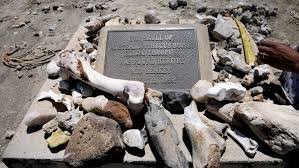
The first person to bring Olduvai Gorge to the scientific world's attention was Professor Wilhelm Kattwinkel, a German neurologist and paleontologist . In 1911, Kattwinkel was traveling through German East Africa (now Tanzania) on a privately funded research trip to investigate sleeping sickness .
According to historical accounts, Kattwinkel came across the gorge quite by accident. One popular version of the story describes him chasing a butterfly and literally falling into the gorge . Upon climbing back up the steep cliff, he noticed fossilized bones eroding from the exposed layers. He collected several fossils, including teeth of an extinct three-toed horse (Hipparion), and took them back to Berlin .
The fossils aroused great interest among scientists in Germany, setting the stage for more systematic exploration of the site . Kattwinkel named the site "Olduvai Gorge" after the Maasai word "Oldupai," which refers to the wild sisal plant (Sansevieria ehrenbergii) that grows abundantly in the area .
It is worth noting that Louis Leakey, who later became synonymous with Olduvai Gorge, incorrectly described Kattwinkel as a "butterfly collector" who accidentally stumbled upon the fossils . In reality, Kattwinkel was a trained neurologist and paleontologist with a genuine scientific interest in the region's fossils .
The First Expedition (1913)
Inspired by Kattwinkel's discovery, a German expedition was organized and led by geologist Professor Hans Reck in 1913 . Reck spent three months at Olduvai Gorge, conducting a geological survey and collecting over 1,700 fossils .
During this expedition, Reck made a controversial discovery: a modern-looking human skeleton embedded in what he believed was a very ancient geological layer (Bed II) . He claimed the skeleton was approximately 150,000 years old—far earlier than previously accepted for modern humans . This claim sparked considerable scientific controversy, as many dismissed it as a recent burial .
Reck established the system of numbering the geological layers at Olduvai (Beds I through V), a system still used by researchers today . His work laid the foundation for all future research at the site.
Unfortunately, most of the faunal material collected during Reck's 1913 expedition was destroyed during World War II, with only a single bovid horn core surviving . Reck's field notes were also lost after his death in 1937 .
Louis and Mary Leakey: The Famous Discoveries
While Kattwinkel and Reck discovered the site and its initial fossil evidence, it was Louis and Mary Leakey who made Olduvai Gorge famous worldwide .
Louis Leakey's First Visit (1931)
Louis Leakey, a British-Kenyan paleoanthropologist, first visited Olduvai Gorge in 1931 with Hans Reck . Within 24 hours of searching, Leakey found Acheulian hand axes, winning a wager with Reck who had claimed no tools would be found there . This discovery convinced Leakey that the site would provide a unique record of human evolution .
From 1931 onwards, Louis Leakey intensively worked the site, returning repeatedly with his wife Mary . Together, they dedicated decades to excavating the gorge, driven by Louis's conviction that East Africa was where humankind evolved .
Mary Leakey's Landmark Discovery (1959)
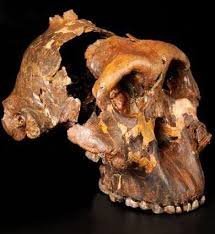
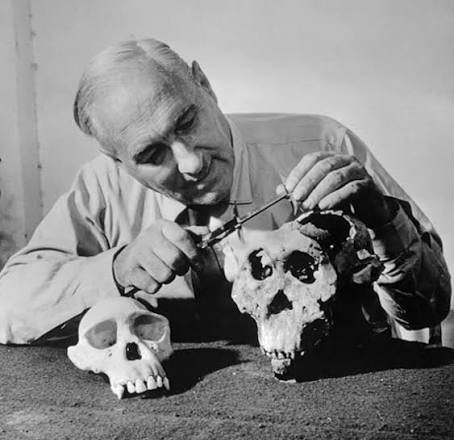
On July 17, 1959, Mary Leakey made the discovery that would make Olduvai Gorge world-famous. While Louis stayed at camp with a severe headache and fever, Mary went out to work and found fossilized parts of a hominid skull eroding from the slopes near Bed I .
Over the next three weeks, the Leakeys recovered more than 400 pieces, assembling an almost complete skull of a previously unknown hominid. They named it Zinjanthropus boisei (later reclassified as Paranthropus boisei) and affectionately nicknamed it "Nutcracker Man" due to its massive molar teeth .
Dated to approximately 1.75 million years old, this discovery radically altered accepted ideas about human evolution. It proved that hominins evolved in Africa and were far older than previously believed .
Jonathan Leakey's Discovery (1960)
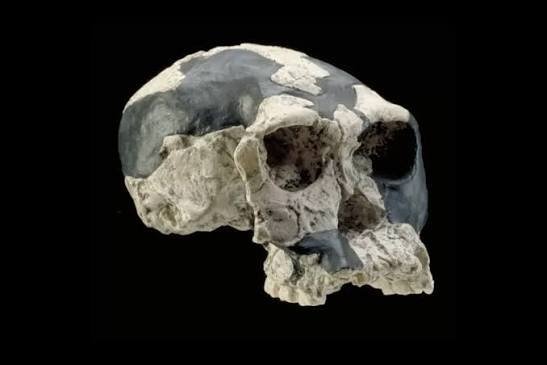
In 1960, Louis and Mary's son Jonathan discovered the jaw and skull fragments of another hominid at a site about 300 yards from where Mary had found "Nutcracker Man" . This specimen had a larger brain (approximately 680 CC) and was named Homo habilis ("handy man") because of evidence that it made and used stone tools .
The discovery of Homo habilis suggested that different hominid species coexisted at Olduvai—a revolutionary idea at the time . Homo habilis is now widely accepted as one of the earliest species in the genus Homo .