
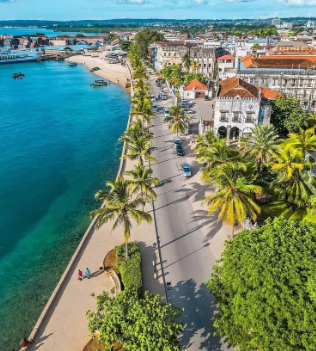
There are few places in East Africa where history feels as immediate as it does in Stone Town. The old city of Zanzibar, a UNESCO World Heritage Site since 2000, is a place where coral-stone walls carry the weight of centuries, where the scent of cloves and cardamom drifts through narrow alleys, and where the call to prayer mingles with the laughter of children playing football in the streets. Stone Town is not a museum; it is a living, breathing city that has been continuously inhabited for over 1,200 years.
A Tapestry of Cultures
Stone Town is a fine example of the Swahili coastal trading towns of East Africa, retaining its urban fabric and townscape virtually intact. Its unique character stems from the way it has brought together and homogenized disparate elements of the cultures of Africa, the Arab region, India, and Europe over more than a millennium. Arab, Portuguese, Omani, British, and Indian merchants all left their mark, creating an architectural and cultural layering that is genuinely unique in the world.
The result is a town where you can see a Catholic cathedral, a mosque minaret, and a residential building all in the same view. It is this cultural diversity and harmony, along with its historic role in Indian Ocean maritime trading, that earned Stone Town its UNESCO World Heritage status.
The Famous Doors
Perhaps the most iconic feature of Stone Town is its carved wooden doors. There are over 500 unique doors in the old city, each reflecting the cultural identity of its original owner. The doors tell the story of the main groups that gave the island its identity: Swahili, Arab, and Indian (Gujarati).
- Swahili Doors: The earliest type, characterized by rectangular, geometric designs and linear carvings, often with rounded tops. Their designs are tied to nature, representing waves and local traditions.
- Arab/Omani Doors: Brought by Arab traders from the Persian Gulf, these are larger and more impressive, often featuring quotes from the Quran and flowing designs found in Islamic artistic traditions. They represented prestige and social standing.
- Indian/Gujarati Doors: These tend to be thick with heavy brass studs. Historically, the studs were designed to protect against war elephants in India; today they are decorative but displayed the wealth of the inhabitants.
The doors were not decorative afterthoughts—they were status symbols, with families often spending more on the door than the house behind it.
A Painful History: The Slave Market
No visit to Stone Town is complete without confronting its darkest chapter. The city was home to one of the largest slave markets in the world, and the market in Stone Town was infamous for being the most brutal. Enslaved people were transported to Zanzibar via overcrowded dhows, with little food and rampant disease; those who didn't survive the journey were thrown overboard.
The Anglican Christ Church Cathedral now stands on the site of the former slave market. The Slave Market Memorial, created in 1998 by Clara Sornas, is a stark reminder of this history. A circle of white stones at the altar marks where the whipping post once stood, while an outer circle of red stones represents the bloodshed.
Key Attractions and Landmarks
Stone Town is small enough to walk entirely, but disorienting enough to get lost in regularly—which is part of the experience. Here are the landmarks that anchor the old city:
- Forodhani Gardens: The seafront gardens at the harbour are the social heart of the city, especially at sunset when the night food market opens.
- House of Wonders (Beit el-Ajaib): The largest building in Stone Town, once the Sultan's ceremonial palace. It is currently being restored.
- Old Fort (Ngome Kongwe): Built by Omani Arabs in the 17th century, it now hosts an open-air amphitheatre and a craft market.
- Darajani Market: The covered bazaar is where you'll find fresh spices, fish, and local produce—go early morning for the best experience.
- Freddie Mercury's Childhood Home: The modest birthplace of the legendary Queen frontman is a popular stop for music fans.
- Hamamni Persian Baths: An 18th-century public bathhouse built by Sultan Barghash.
What to Eat
The Forodhani Night Market is a must-visit. Every evening from around 7 PM, vendors set up grills along the seafront promenade. You can try Zanzibar pizza (a stuffed flatbread, nothing like Italian pizza), mishkaki (marinated grilled meat skewers), fresh seafood, sugarcane juice, and Zanzibar mix, a street food salad unique to the island.
For a more refined experience, several restored historic buildings have opened rooftop restaurants with views over the coral-stone rooftops and the harbour. The sunset from these rooftops is one of East Africa's great experiences.
Practical Tips for Visiting Stone Town
- Wear comfortable shoes: Stone Town is best explored on foot through narrow, uneven cobbled streets.
- Dress modestly: Cover shoulders and knees, especially in areas closer to mosques and residential neighborhoods.
- Ask before photographing locals: It's respectful to ask permission.
- Be prepared for the heat: Bring water and take breaks.
- Consider a guided tour: The winding streets can be hard to navigate alone, and a local guide brings the history to life.
- Be cautious with street touts: Known locally as papaasi, treat them with caution and organize tours through your hotel or a reputable agent.

The Spice Connection
Zanzibar was for centuries the world's largest producer of cloves, and spice cultivation remains central to the island's identity. A half-day spice tour from Stone Town visits working spice farms on the island's interior, where guides identify and explain cloves, nutmeg, vanilla, cinnamon, lemongrass, black pepper, turmeric, cardamom, and dozens of other plants growing in extraordinary proximity. It is one of the best half-days you can spend in Zanzibar.
Final Thoughts
Stone Town is not a place to rush. It is a place to wander, to get lost, to sit with a cup of spiced coffee and watch the world go by. It is a place where the past and present coexist—where fishermen still sell their catch at Darajani market before dawn, and where the spice trade that made Zanzibar famous continues in the covered bazaar.
Whether you are a history buff, a photographer, a food lover, or simply a curious traveler, Stone Town will leave an impression. It is one of the Indian Ocean's great historic cities—labyrinthine alleys, crumbling coral-stone architecture, spice merchants, and the world's best sunsets await.