
Explore the history of Olduvai Gorge in Tanzania, from ancient fossils and stone tools to the remarkable archaeological discoveries that transformed our understanding of human evolution.
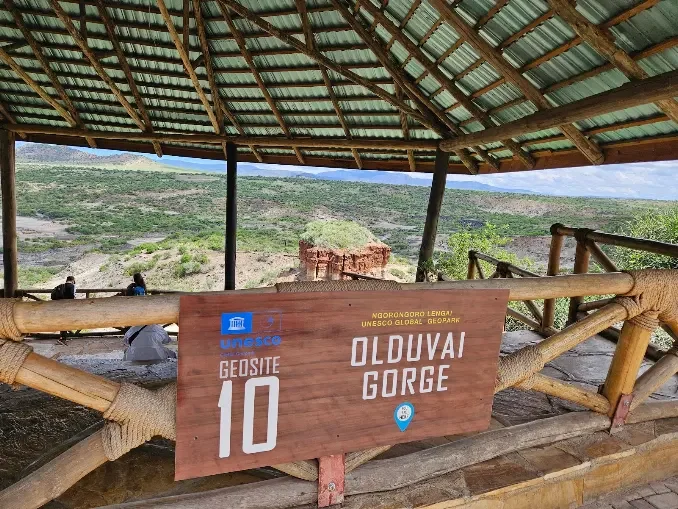
Olduvai Gorge history is deeply connected to the story of human evolution and the development of archaeology in East Africa. Located in northern Tanzania, Olduvai Gorge is one of the world’s most important archaeological sites, where researchers have uncovered ancient fossils, stone tools, animal remains, and other evidence dating back millions of years.
The history of Olduvai Gorge became internationally significant through archaeological research that revealed evidence of early human ancestors and their activities. Major discoveries by Mary and Louis Leakey helped establish the area as a key location for understanding human origins, while later research has continued to expand knowledge of ancient environments, technology, and human development.
What makes the history of Olduvai Gorge particularly remarkable is the long sequence of archaeological and geological layers preserved in the area. These layers contain evidence from different periods, allowing scientists to investigate changes in early human life, stone-tool technology, animal populations, and environmental conditions over vast periods of time.
Today, Olduvai Gorge represents far more than an ancient archaeological site. Its history forms an important part of Tanzania’s cultural and scientific heritage and continues to contribute to the global understanding of human evolution, archaeology, and the ancient history of Africa.
The Ancient History of Olduvai Gorge
The ancient history of Olduvai Gorge stretches back millions of years, making it one of the most valuable places for understanding the distant past of Africa. Long before it became an archaeological site, the area experienced major environmental and geological changes that helped preserve evidence of ancient life.
Over millions of years, volcanic activity, erosion, sediment deposition, and changes in climate shaped the landscape of the gorge. Layers of sediments gradually accumulated and buried fossils, stone tools, animal remains, and other evidence of life from different periods. These layers later became an important geological record for researchers.
The ancient environment around Olduvai Gorge was also very different from the landscape visitors see today. Changes in water availability, vegetation, climate, and wildlife created different habitats over time. Early human ancestors lived within these changing environments and adapted to the resources available to them.
Because so much evidence has been preserved in successive geological layers, scientists can study Olduvai Gorge as a long record of environmental and human history. The site provides valuable information about how ancient landscapes changed and how early hominins responded to those changes.
This extraordinary combination of geology, fossils, stone tools, animal remains, and environmental evidence is one of the main reasons Olduvai Gorge has become so important in the history of archaeology and the study of human evolution.
How Olduvai Gorge Was Formed
The formation of Olduvai Gorge is closely connected to the geological and volcanic history of northern Tanzania. Over millions of years, volcanic activity, erosion, sediment deposition, and changes in the surrounding landscape gradually created the deep gorge seen today.
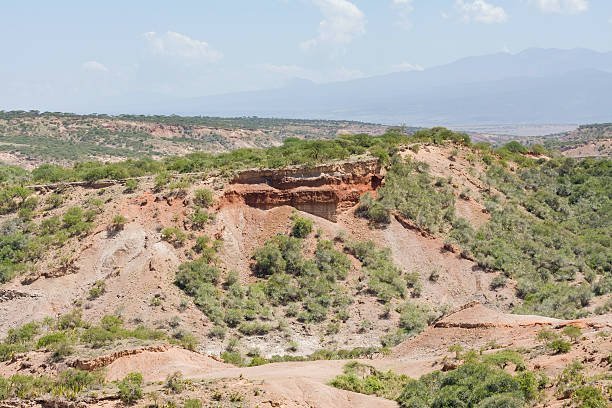
The region was influenced by volcanic activity associated with the East African Rift System. Volcanic eruptions produced layers of ash and other materials that were deposited across the landscape. Later, water erosion gradually cut through these deposits, exposing the geological layers that now form the walls of Olduvai Gorge.
These layers are extremely important because they preserved evidence from different periods of the ancient past. Fossils of early hominins, animals, and plants, together with stone tools and other archaeological remains, became buried within the sediments and were protected for long periods.
As erosion continued, the different layers became exposed, allowing archaeologists and geologists to study the sequence of events preserved within the gorge. Each layer can provide clues about the ancient environment, climate, wildlife, human activity, and geological changes that occurred at different times.
The geological formation of Olduvai Gorge is therefore an essential part of its history. Without the combination of volcanic activity, sedimentation, and erosion, much of the archaeological evidence that makes Olduvai Gorge so important today might not have been preserved or exposed for scientific study.
Early Human History at Olduvai Gorge
The early human history of Olduvai Gorge is one of the most important parts of its archaeological significance. Evidence preserved in the gorge shows that ancient hominins occupied the region over a very long period and used the surrounding environment for food, shelter, and other resources.
Archaeological discoveries from different layers include hominin fossils, stone tools, animal remains, and other evidence of ancient activity. Together, these findings allow researchers to investigate how early human ancestors lived, what environments they experienced, and how their behavior and technology changed over time.
The stone tools are particularly important because they provide evidence of early technological development. By examining the tools alongside animal remains and other archaeological evidence, researchers can learn more about activities such as processing food and interacting with the surrounding environment.
Olduvai Gorge is also valuable because its archaeological record covers different periods rather than representing only one moment in human history. This allows scientists to examine changes in human anatomy, behavior, technology, and environmental adaptation across long periods of time.
The evidence from Olduvai Gorge has therefore played a major role in reconstructing the early history of humans in Africa and understanding the broader story of human evolution.
The First Archaeological Research at Olduvai Gorge
The history of archaeological research at Olduvai Gorge began before the site became internationally famous for its discoveries of early human fossils and stone tools. Early scientific interest in the area grew as researchers recognized that its exposed geological layers contained valuable evidence about the ancient environment and past life of northern Tanzania.
One of the early researchers associated with Olduvai Gorge was Hans Reck, a German palaeontologist who led an expedition to the area in 1913. His team documented fossils and geological evidence, including the discovery of an ancient human skeleton that later became known as the “Olduvai Hominid.” Although research was interrupted by World War I, the expedition helped demonstrate the archaeological and scientific potential of the gorge.
Later, systematic archaeological and palaeoanthropological research expanded significantly, particularly through the work of Louis and Mary Leakey. Their excavations and discoveries transformed Olduvai Gorge into one of the world's most important sites for studying early humans and human evolution.
The early research at Olduvai Gorge was therefore an important foundation for the discoveries that followed. It helped establish the scientific value of the site's geological layers and paved the way for decades of research into ancient human fossils, stone tools, environmental change, and the origins of humankind.
Mary and Louis Leakey at Olduvai Gorge
The history of Olduvai Gorge is closely associated with the pioneering work of Louis and Mary Leakey, whose archaeological and palaeoanthropological research helped establish the site as one of the world's most important locations for studying human evolution.
The Leakeys began systematic research at Olduvai Gorge in the 1930s and returned to the area for many years. Their excavations uncovered important hominin fossils, ancient stone tools, animal remains, and other archaeological evidence, providing researchers with valuable information about early human life in East Africa.
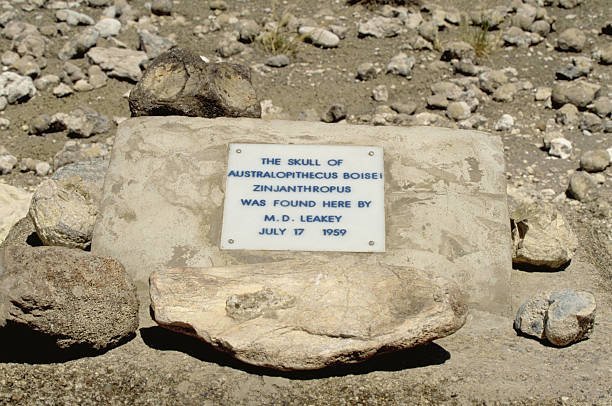
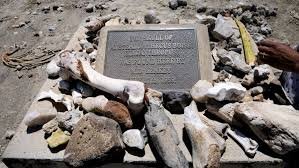
One of Mary Leakey's most important discoveries came in 1959, when she uncovered a well-preserved hominin skull later identified as Paranthropus boisei. The discovery attracted international scientific attention and demonstrated the extraordinary importance of Olduvai Gorge to the study of human evolution.
Louis and Mary Leakey's work did not end with a single discovery. Their continued excavations and research helped reveal a long archaeological record preserved in the gorge's geological layers. Their findings contributed to the understanding of early hominins, stone-tool technology, ancient environments, and human evolution.
The Leakeys therefore occupy an important place in Olduvai Gorge history. Their discoveries transformed the site from a relatively little-known archaeological location into a globally recognized center for research into human origins and the ancient history of Africa.
Major Fossil Discoveries at Olduvai Gorge
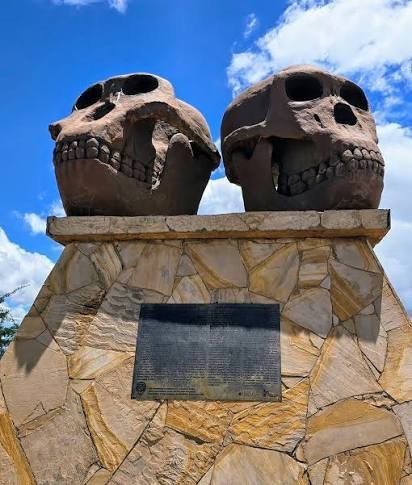
The history of Olduvai Gorge is marked by some of the most important fossil discoveries in the study of human evolution. Over decades of archaeological research, scientists have uncovered remains of early hominins that have provided valuable evidence about the development and diversity of our ancient ancestors.
One of the most famous discoveries was made by Mary Leakey in 1959, when she found the skull of Paranthropus boisei, originally named Zinjanthropus boisei. The fossil became an important piece of evidence in the study of early hominins and brought worldwide attention to Olduvai Gorge.
Another significant discovery was the fossil evidence associated with Homo habilis, an early member of the human genus. Finds attributed to Homo habilis at Olduvai Gorge, together with associated stone tools, contributed greatly to scientific discussions about early human behavior, anatomy, and technological development.
Researchers have also discovered other hominin remains alongside animal fossils, stone tools, and geological evidence. Studying these discoveries together helps scientists reconstruct the environments in which early hominins lived and understand how they interacted with the resources around them.
These fossil discoveries are a major reason Olduvai Gorge has become internationally recognized. They form an important part of the site's history and continue to support scientific research into human origins, early hominins, and the evolution of our species in Africa.
The Discovery of Ancient Stone Tools at Olduvai Gorge
The discovery of ancient stone tools is another important chapter in the history of Olduvai Gorge. Archaeologists have recovered thousands of stone artifacts from the gorge's archaeological layers, providing valuable evidence of the technological abilities and daily activities of early hominins.
Among the discoveries are simple stone flakes, choppers, and other tools associated with early human activity. These artifacts show that ancient hominins were capable of selecting and shaping stones for practical purposes, including cutting, processing animal remains, and accessing food resources.
The stone tools are particularly valuable because they can be studied alongside hominin fossils and animal remains found in the same archaeological contexts. This combination helps researchers investigate how early humans used their environment and how their technological abilities developed over time.
Olduvai Gorge is also strongly associated with the Oldowan stone-tool tradition, one of the earliest known technological traditions in human history. Evidence from the site has played an important role in understanding the development of early stone-tool technology in Africa.
The discovery and study of these ancient tools have therefore become an essential part of Olduvai Gorge history, helping scientists understand not only what early humans looked like, but also how they behaved, used technology, and adapted to their environment.
Olduvai Gorge and the Study of Human Evolution
The history of Olduvai Gorge is inseparable from the scientific study of human evolution. The fossils, stone tools, animal remains, and geological evidence discovered at the site have helped researchers investigate how early hominins lived, developed, and adapted to changing environments over millions of years.
One of the greatest strengths of Olduvai Gorge is the combination of different types of evidence preserved in its archaeological layers. Hominin fossils can be studied alongside stone tools, animal remains, and geological deposits, allowing scientists to explore connections between human anatomy, behavior, technology, diet, and the environment.
Research at Olduvai Gorge has also contributed to understanding the development of early human technology. The presence of Oldowan stone tools provides evidence of ancient toolmaking and helps researchers examine how technological behavior developed among early hominins.
The site's long sequence of geological and archaeological layers is equally important. By studying evidence from different periods, researchers can investigate how early human ancestors and their environments changed through time.
For these reasons, Olduvai Gorge has played a major role in the scientific study of human origins and evolution in Africa. Its discoveries continue to provide important evidence for understanding the long and complex history of humankind.
Important Archaeological Layers at Olduvai Gorge
One of the most important features of Olduvai Gorge history is its sequence of geological and archaeological layers. These layers preserve evidence from different periods of the ancient past and allow scientists to study changes in human life, technology, animals, and the environment over millions of years.
The lower layers are particularly significant because they contain some of the earliest evidence of hominin activity and stone-tool technology at the site. As researchers move through younger layers, they can examine evidence from later periods and compare changes in archaeological materials and environmental conditions.
Among the best-known geological units are Beds I, II, III, and IV, which contain important archaeological evidence. Bed I, for example, has produced significant early hominin fossils and Oldowan stone tools, while higher beds preserve evidence from later stages of human and environmental history.
The layers also contain volcanic ash and other geological materials that help scientists establish the age and sequence of archaeological discoveries. This makes Olduvai Gorge valuable not only for archaeology but also for geology, palaeoanthropology, and environmental research.
By studying these layers together, researchers can build a detailed picture of how the landscape and its inhabitants changed through time. This geological sequence is one of the key reasons Olduvai Gorge remains such an important site for understanding ancient Africa and human evolution.
Olduvai Gorge Museum and Preservation of Its History
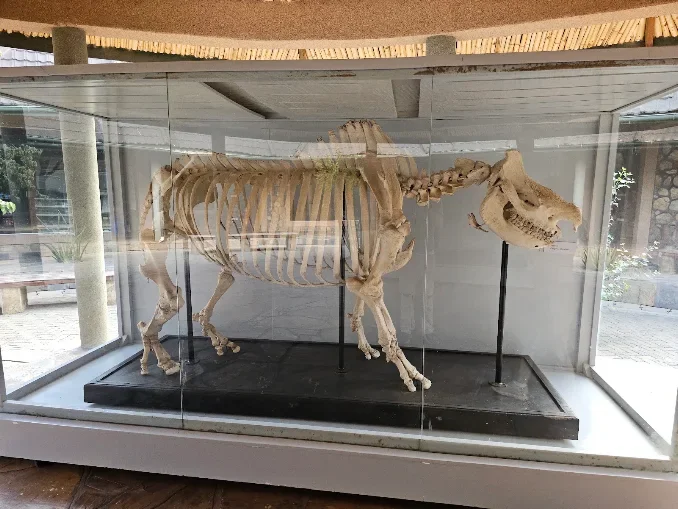
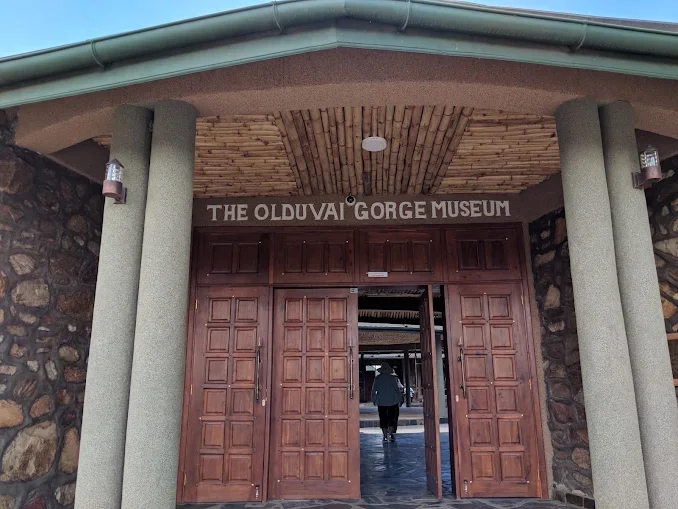
The Olduvai Gorge Museum plays an important role in preserving and presenting the archaeological history of Olduvai Gorge. Located near the gorge, the museum provides visitors with an opportunity to learn about the fossils, stone tools, geological evidence, and major discoveries that have made the area internationally significant.
The museum helps explain the work of researchers such as Mary and Louis Leakey and presents information about the early human remains and archaeological materials discovered in the region. Exhibits also help visitors understand the relationship between ancient humans, wildlife, geology, and environmental changes.
Preserving this history is important because Olduvai Gorge contains evidence that contributes to the understanding of human evolution and the ancient history of Africa. Archaeological research, conservation, documentation, and responsible tourism all help protect this heritage for future generations.
Today, the Olduvai Gorge Museum serves as an important educational part of the site, connecting visitors with the discoveries and scientific research that have shaped our understanding of early humans and human origins.
Why Olduvai Gorge History Is Important Today
The history of Olduvai Gorge remains important today because it provides valuable evidence for understanding the long history of human evolution, archaeology, and life in ancient Africa. The fossils, stone tools, animal remains, and geological layers discovered at the site continue to support scientific research and education.
Olduvai Gorge has also become an important part of Tanzania’s cultural and scientific heritage. Its discoveries have connected Tanzania with some of the most significant research into human origins and have helped demonstrate the importance of East Africa in the study of humanity’s past.
The site is equally valuable for education and responsible tourism. Visitors can learn about ancient human ancestors, archaeological discoveries, and the changing environments in which early hominins lived. This makes Olduvai Gorge meaningful not only to scientists but also to travelers, students, historians, and anyone interested in human history.
Protecting Olduvai Gorge and its archaeological evidence is therefore essential. Preserving the site allows future generations of researchers and visitors to continue learning from its remarkable record of the past.
Ultimately, the history of Olduvai Gorge remains important because it helps answer fundamental questions about where humans came from, how our ancestors lived, and how human societies developed over time.
The Lasting Historical Importance of Olduvai Gorge
The history of Olduvai Gorge is one of the most remarkable chapters in the archaeological and scientific heritage of Tanzania. From its ancient geological layers to the discovery of early hominin fossils and stone tools, the site has provided extraordinary evidence about the distant past of Africa.
The pioneering research of Mary and Louis Leakey, together with the work of earlier and later scientists, transformed Olduvai Gorge into a globally recognized archaeological site. Its discoveries have helped researchers investigate human evolution, early technology, ancient environments, and the lives of our ancestors.
Today, Olduvai Gorge remains an important place for scientific research, education, heritage preservation, and responsible tourism. Its history continues to remind us that Tanzania is home to some of the world's most valuable evidence for understanding the origins and development of humankind.
Ultimately, Olduvai Gorge is not simply a place with ancient fossils, it is a remarkable historical record that helps tell the story of human evolution in Africa. Preserving its archaeological heritage ensures that future generations can continue to learn from one of the most important sites in the history of humanity.
Why Choose Morishas Tours & Safaris to Explore Olduvai Gorge History?
Choosing Morishas Tours & Safaris gives you the opportunity to discover the history of Olduvai Gorge with a knowledgeable local Tanzania tour operator.
- Local Tanzania Expertise: We have strong knowledge of Olduvai Gorge and Tanzania’s archaeological and cultural heritage.
- Experienced Safari Guides: Our professional guides help explain the history, fossils, stone tools, and human-evolution discoveries in an engaging way.
- Educational Experiences: We make your visit informative, helping you understand the importance of Olduvai Gorge beyond simply sightseeing.
- Customized Tours: We can tailor your experience according to your interests, travel dates, budget, and itinerary.
- Combine History & Wildlife: Your Olduvai Gorge experience can be combined with iconic destinations such as Serengeti and Ngorongoro.
- Reliable Safari Services: We provide well-organized transportation, professional support, and carefully planned Tanzania travel experiences.
- Responsible Tourism: We value the protection of Tanzania’s archaeological heritage, environment, and local communities.
With Morishas Tours & Safaris, discover the remarkable history of Olduvai Gorge and connect with the ancient story of human evolution in Tanzania.
Frequently Asked Questions About Olduvai Gorge History
1. What is the history of Olduvai Gorge?
Olduvai Gorge has a history spanning millions of years and is famous for preserving fossils, stone tools, animal remains, and geological evidence that help scientists study early human evolution and ancient environments.
2. Who discovered Olduvai Gorge?
Olduvai Gorge was known locally before scientific research began, but Hans Reck led an important expedition there in 1913. Later, Louis and Mary Leakey carried out extensive research that made the site internationally famous.
3. When did the Leakeys begin working at Olduvai Gorge?
Louis and Mary Leakey began systematic research at Olduvai Gorge in the 1930s and continued their investigations for many years, making discoveries that transformed the scientific importance of the site.
4. What did Mary Leakey discover at Olduvai Gorge?
In 1959, Mary Leakey discovered a hominin skull later identified as Paranthropus boisei. The discovery attracted international attention and became one of the most significant finds in the history of Olduvai Gorge.
5. What fossils have been found at Olduvai Gorge?
The site has produced important hominin fossils associated with species such as Paranthropus boisei and Homo habilis, as well as numerous animal fossils that help researchers understand ancient ecosystems.
6. Why are the stone tools at Olduvai Gorge important?
The ancient stone tools provide evidence of early technological behavior. They help researchers understand how early hominins processed food, used resources, and developed simple technologies.
7. Why is Olduvai Gorge important to human evolution?
Olduvai Gorge contains evidence from different periods, allowing scientists to study changes in early human anatomy, behavior, technology, and environmental adaptation over long periods of time.
8. What are the main archaeological layers of Olduvai Gorge?
The best-known archaeological sequence includes Beds I, II, III, and IV, which preserve evidence from different periods and provide an important record of early human activity and environmental change.
9. Why is Olduvai Gorge important to Tanzania?
Olduvai Gorge is an important part of Tanzania’s scientific, archaeological, and cultural heritage. It has played a major role in research into human origins and has international importance in the study of human evolution.
10. Can visitors learn about Olduvai Gorge history?
Yes. Visitors can learn about the site's archaeological discoveries, fossils, stone tools, and research history through the Olduvai Gorge Museum and guided visits to the area.
11. How Can I Book an Olduvai Gorge Tour with Morishas Tours & Safaris?
Booking an Olduvai Gorge tour with Morishas Tours & Safaris is simple. Contact our team through WhatsApp or email and provide your preferred travel dates, number of travelers, and any specific interests or requirements.
Our team will help you plan your visit and can combine Olduvai Gorge with other Northern Tanzania destinations, including Serengeti National Park and the Ngorongoro Conservation Area. We can also customize your itinerary according to your schedule, budget, and travel preferences.
Contact Morishas Tours & Safaris today and start planning your journey into the fascinating history of Olduvai Gorge and human evolution in Tanzania.